

When I heard the words penal colony, I was having visions of Papillon and Les Misrable, tortured images of the innocent Jean Valjean, hauling rocks and being beaten by sadistic guards. The Philippines wouldn’t be the first country I would think of in a discussion of prison reform and innovative rehabilitation programs. My opinion changed dramatically, however, after a tour of the penal colony, on Palawan Island. A philosopher once said, “If you want people to behave like animals, put them in cages.” In the penal colony, the prisoners are free to roam about the grounds. They work in the rice fields, growing their own food. They are given a weekly supplemental food allowance and must learn to budget and cook for themselves. They make and sell handicrafts, attend church and have social clubs.
Back home in Brooklyn, NY, we often referred to the prisons, Rykers and Attica, as “gladiator academies,” places where dangerous men went and became more dangerous. But when prisoners leave the penal colony on Palawan Island, they are ready to live on their own in society and do an honest day’s work.
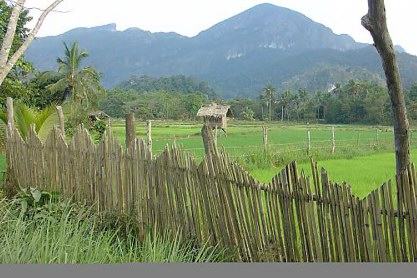
Down a quiet country road, amid the tropical beauty of Puerto Princesa, the cleanest and greenest city in the Philippines, two kilometers from the prison, my guide, Yuks, pointed at some ordinary farm houses surrounded by rice paddies.
“This is all part of the prison.” he said.
There were no walls, no fences, barely even a sign, only a large statue of blind justice marked the entrance to the penal colony. A single guard, one of only three who operate the facility, armed only with a pistol, greeted our vehicle and had us sign the guest register.
Cruising the beautifully manicured common area, I was shocked to see a prisoner, with a huge bolo knife tucked into his belt.
“They need those for their farm work.” he explained.
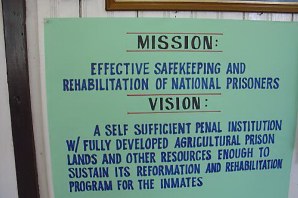
On the wall in administration building was sign which read, “Mission statement: The effective safe keeping and rehabilitation of prisoners. Vision statement: “A self-sustaining penal institution with fully developed agricultural, sustainable rehabilitation.”
Ten minutes into our visit, it seemed to me that these noble goals had been achieved. According to the head inmate, the rate of recidivism is 1 in 500.
Anthony, an inmate who had already served ten years for murder, told me that he had only finished the third year of high school when he was arrested near Manila. “At first, I had difficulty getting used to the schedule. I wasn’t used to doing heavy farm work.” Other new concepts Anthony had to adjust to were learning to cook for himself and budgeting his weekly allotment of food.
Anthony did the first four years of his sentence in a maximum security prison in Manila, but he likes the penal colony much better. “Here we are free to walk around. In the prison in Manila, there was always trouble. There were gangs and violence. Here there are no problems.”
A section boss or prison foreman, himself an inmate, rode up on a bicycle, armed with a baton. “Sometimes I need this to maintain order,” he said. The section boss explained that he lived with the men and made sure they turned out for work and observed lights out. “The men work from 8 AM to 8 PM. New prisoners are assigned to brigades, where they eat, sleep, and work.” They are never required to wear chains, manacles, or leg irons. “New prisoners live in a barracks and eat on a schedule in a cafeteria. Successful prisoners who have been here longer live in bungalows. They get a food allotment and cook for themselves.”
The section boss told us that he was convicted of murder. “If you commit a crime in Manila you have to go to maximum security prison for the first part of your sentence before you would be eligible to come to the penal colony. If you commit a crime in province maybe you would come here first.” He had spent four years in maximum in Manila followed by six years in the penal colony. “In Manila jail there were riots. People got hurt or killed. We were always nervous, watching out. Here it is calm, tranquil.”
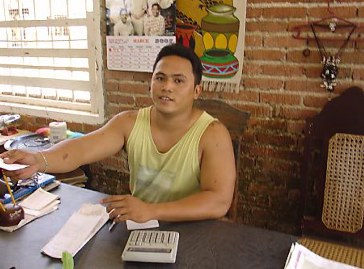
At the colony there were no phones, no cell phones, and no internet. Prisoners could only keep in touch with their families by writing letters.
“We can earn some money by making handcrafts and selling to tourists. We can’t go off the grounds at all.” The section boss explained that if prisoners left the grounds, there was an implied threat that they would have to go to the guard house for punishment followed by shipment back to maximum in Manila.
The penal colony had two churches, one Catholic mission run by nuns, and a Protestant church. Many of the inmates said that they had converted to Protestantism. They were Catholic when they committed the crime, so they changed to Protestant now.
The approximately 2,000 prisoners are divided according to how long they have been in the facility. New prisoners live in barrack. Long timers live in bungalows. At the top of the prison hierarchy were the prisoners of the release unit, all of whom were only a few months away from being released. These were the only prisoners allowed to have contact with tourists and have the opportunity to make money by selling souvenirs.
The section boss said the biggest lesson he learned in the prison was patience. “Before, I was less tolerant. Also, I was in a gang. We stay in our gangs here too, but it is not for trouble, only for social.”
A prisoner named Marcos claimed to be a US citizen, born in Subic Bay, which was a US Territory till the late 1990s. “My father was a sergeant in the US Marines.” Said Marcos. “My father used to send me 1,000 Pesos every month. Then in 1999 the money just stopped, and I didn’t have anymore contact with my father.” Marcos claimed that his passport, birth certificate and other documents had been lost. “When I get out, I plan to go to the US Embassy and try to find my father.”
If the story is true, it was sad. All around the world, US military personnel have left a number of single mothers and fatherless children with no support. Often, these deadbeat dads don’t even arrange a US passport for the child or register the birth. The fathers disappear into the massive military establishment and the Philippine taxpayers are left to support the mestiso children when they get in trouble.
“I was 16 years old when I committed a murder in Manila. I did one year in maximum and eight years here. Life is better here.” Said Marcos. “It is calm. We get free food, and a free house, but we have to pay for soap.”
Most of the prisoners were from poor families and admitted that life in the prison was better than being back on the streets in some slum in Manila. In Puerto Princesa they had a mountain view, fresh air, and nice weather. Most were probably better fed than back home. I really couldn’t see why anyone would want to leave. And yet, all of them said that upon release they would return to their home. Apparently, the nature of human beings is to seek freedom, even if their prison was like a holiday camp. There were no female prisoners, but prisoners were allowed to marry, so there were women and children living at the facility.
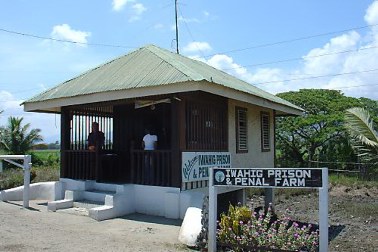
A prisoner working in the gift shop, Louis, told us that he was married at the penal colony and lives with his wife. His two sons were born there, and they attend the elementary school along with the 47 other children on the prison grounds. Louis had was the major, the highest ranking prisoner, after having spent 22 years of his life in the colony. “The prison provides food allotment for prisoner only, not for the family. So, I have to support my family myself, by selling trinkets to tourists.”
Like all of the others, Louis plans to go home after his sentence is finished. “Upon my release the government will pay for my flight, but not for my family. So, I will have to pay for the family myself.” Before coming to the penal colony, Louis had served a sentence in the maximum security facility in Manila. “It was very violent.” he exclaimed. “I am in for murder. The reason my sentence was so long is because I killed two men in max in manila.”
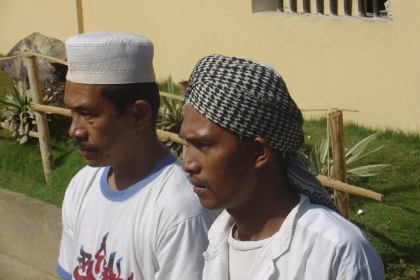
According to Louis, who also works in the prison office, there are five similar colonies in the Philippines. “But only this one is referred to as a prison without bars.” There are 16 families and 48 children in the facility. With free education for the children, food, lodging… I asked, once again, why the prisoners would even want to leave. “You can’t stay here when your sentence is finished,” answered Louis, almost with remorse.
Louis had spent more than half of his life behind bars. The final and obvious question was, what had he learned, and how would he adjust to the real world. “I learned a lot in here in release group. Living in Manilla prison I didn’t know how to communicate. Now I have contact with people, including foreigners, so I learned to communicate with people again.”
My driver said it was time to go. As I walked past the prison tennis courts, I wished Louis well. I also considered booking a room there for a few nights.
 Real Travel Adventures