

“We need to get the word out to the world.” Said Kelly, a volunteer at North Andaman Tsunami Relief. Many people are wondering how they could help the Thailand Tsunami victims. “They could help by just coming as a tourist and staying in a community based tourism project.”
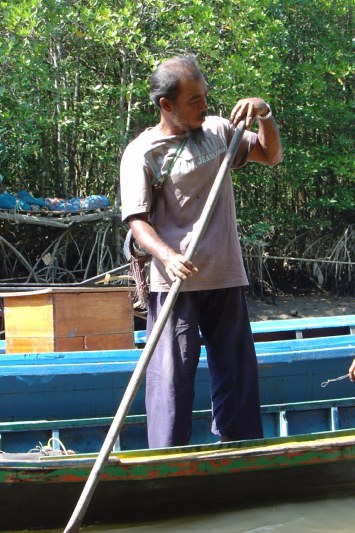
The 2004 Tsunami, which ripped through Thailand’s Andaman coast left thousands dead. The death toll only represents a fraction of those made homeless. Tens, even hundreds of thousands more lost their livelihood. When the angry sea finally receded, shop owners and farmers found they had nothing to return to. Near Koh Phratong, the bulk of the largely Muslim population made their living as subsistence fishermen, catching enough today to eat to tomorrow, with little or nothing to spare for a rainy day. With their boats lost, the men realized they would be unable to feed their families.
Aid poured in from benevolent organizations and generous individuals around the world. Once immediate needs, such as food, water, medicine, and shelter were met, long-term solutions had to be found, to ensure the future well-being of this community which had endured more than its share of suffering. Bodhi Garrett is founder and director of North Andaman Tsunami Relief. The purpose of the organization is to provide the local communities with sustainable alternative income sources through community based tourism. The NATR projects encompass a large array of excursions and eco-tourism, all run by locals. The NATR also provides villagers, many of them female, with training in English language, tourism, marketing, and management.
After I had spent the night at the home of a Muslim fisherman and his wife, as part of an NATR home-stay, my guide, Mustafa, took me in a power boat, down an inter-coastal waterway. The scenery was breathtaking. Along the banks was a pristine, primeval forest, like taking a tour through the set of Jurassic Park. The day was growing late and it was time for the fishermen take in their nets. They smiled and wished us peace, as we rode past. It was hard to believe that just a few miles down the coast, German backpackers in bikini briefs, drinking beer, packed like sardines on a crowded tourist beach, believed they were experiencing Thailand!
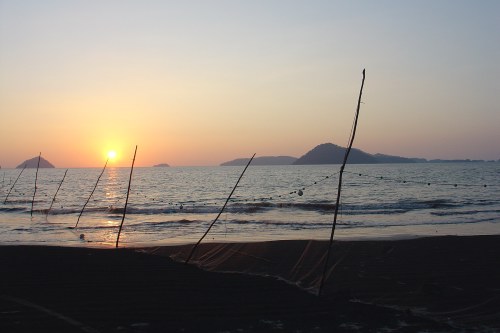
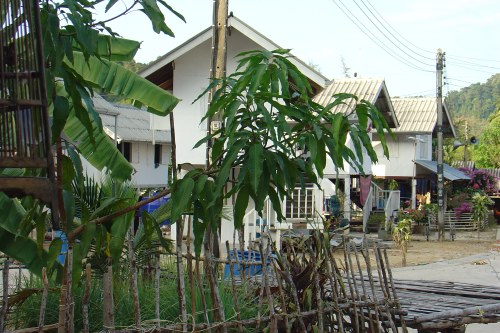
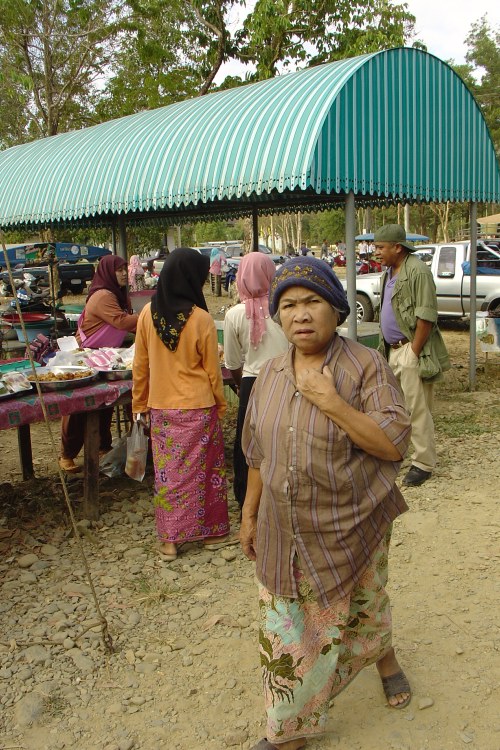
On a small, quiet island, Mustafa pointed at the remains of a village. Nearly everyone had been killed. The remaining villagers voluntarily relocated to a new island. The village, called Baan Pak Triem, was the site of one of NATRs projects. As we came around a bend, we could see the floating bungalows, just waiting for the tourists to come. We docked the boat and stepped onto one of the floating hotel rooms. They were absolutely beautiful and made from woods which blended with the natural environment. It was easy to imagine that a night in the bungalow would be a peaceful experience, being slowly rocked to sleep by the gentle rise and fall of the water. The manager came out to greet us. Her name was Ghi, a local Muslim girl, wearing a head shawl. The NATR team had given her four months of training, helping her transition from stay-at-home fisherwoman to running a small business.
Ghi explained that in addition to relaxing in the tranquility of the place and taking in the beautiful scenery, guests could fill entire days with fishing, laying squid traps, snorkeling, or tenting out on the island. When they returned to the bungalows, the local women would help the tourists cook up the fish they caught. Sitting out on the floating veranda, eating freshly caught, grilled fish, listening to the serenade of the jungle animals, would be the perfect end to any day. Visitors could also spend their time tenting out on the island, taking long jungle walks, or just hang around the village, getting to know the people.
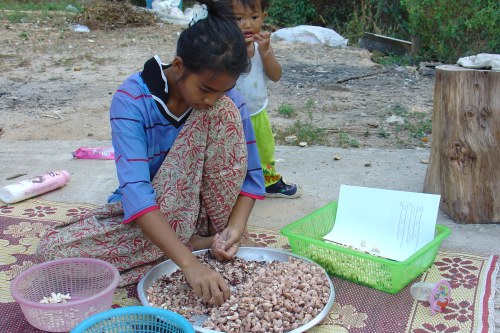
NATR tries to include as many locals as possible, particularly women , who may have been overlooked in traditional societies. In Baan Pak Triem NATR has helped the women create a small business of making tie-die clothing. The dies, made from natural bark and plants, found in the jungle, represent one of many examples where NATR tries to employ local knowledge.
According to Kelly, a volunteer from NATR, the women need the tie-die clothing business as a source of income because their husbands were killed in the tsunami. Kelly explained that aid was kind, but often misguided. “For one thing, much too much clothing arrived.”
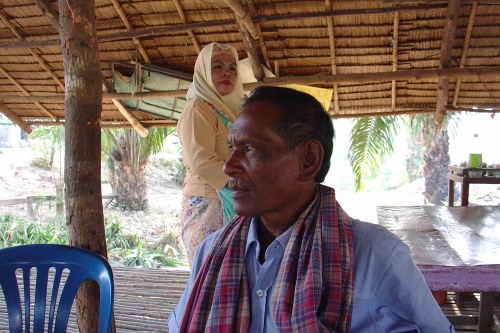
These were simple people who only had one or two changes of clothing to begin with, and of course, the city clothes were useless to them out here.
“Coffins were donated, but they were the wrong kind.” Said Kelly.
Other problems arose from the improper storage of donated items which resulted in their being rendered unusable. A huge school was apparently built in an area where there were only six students. By law, you need a minimum of fourteen to have a teacher, so the school closed. A modern clinic was also built, but there was no doctor, so it closed.
Foreign visitors enjoy home-stays, trekking, fishing excursions, and floating bungaloes owned and operated by the local population
“L’Oriel is one of the major sponsors.” Explained Kelly. “They didn’t want to just give money to the people. They wanted to invest money in creating programs which will create jobs and incomes.” NATR was culturally conscious and had built a wonderful tourism program, but one thing they lacked was tourists. “Just how would people find out about your tours,” I asked Ghi.
“We have a website.” She answered timidly. Assuming people stumble onto you website, are you monitoring your email? I asked. “What is email?” She answered, looking to Kelly for help.
Any other marketing programs in the works?
“We are planning to print a brochure.”
And how will this brochure get into the hands of tourists?
“I don’t know.”
The program seems like an excellent idea, but it still has some kinks that need to be ironed out.
“There has been no emphasis beyond the building of the program.” said Kelly. “We put all of our energy into that, but now what?”
Luckily, people like Kelly and Bodhi are staying on to help the locals organize and run a profitable business. Kelly spoke of aid programs, by other organizations. “Other programs are even worse off, with no one staying behind to help the people. Sustainable means going beyond the building. We will be doing training and marketing.”
These people were simple fisher folk, with low levels of education. Now they have a website and are running a business. They are expected to operate tours and manage a restaurant and a hotel for vacationers, but none of them had ever been on a tour, eaten in a restaurant, stayed in a hotel, or gone on vacation. Furthermore, they were required not only to learn to communicate in English, but to embrace the web and answer emails coming in from any number of countries, asking questions about further issues and situations which fishermen would never have encountered before. Conceptually, this must all be quite difficult for them to grasp. According to Kelly, most of them had never had any English before. “NATR runs English and training classes for them but attendance is inconsistent.”
“We need to get the word out to the world.” Said Kelly. Many people are wondering how they could help the Tsunami victims. “They could help by just coming as a tourist and staying in a community based tourism project.”
Foreigners could also help by doing an unpaid internship with NATR.
Both volunteers and tourists need to be aware of and sensitive to local culture. These community based programs are not hotels or resorts. Visitors must remember that they are integrating into the daily lives of local people.
“We have a code of conduct and a code of dress. Ladies have to cover their arms and legs. There can’t be any drinking of alcohol or eating of pork in the villages.”
Even without the Tsunami, the coastal fishing villages were facing modern problems which threatened their continued existence. The waters are nearly fished out and the men are also looking for another income. Often, villages and entire cultures get destroyed when the young people leave the village in search of work. With little or no knowledge of the outside world and no job skills, they become easy prey for predators from the sex trade, or become victims of labor exploitation. Often, they never return to the village, and the village dies of youth-drain. “There is a lot of interest from families to educate their children, but there is a fear of having them leave the village or lose their Muslim ways.” said Kelly.
The beauty of community based tourism is that the children can remain right in the village and have a good job. Many NGO projects educate the children and teach them English, but they are still unqualified to do any job. They don’t want to be farmers or fishers anymore, but they aren’t qualified to do anything. Hopefully, community based tourism will provide well-paying jobs for clever village youth with good English and computer skills.
Kelly’s parents had flown all the way from England to be some of the projects’ first guests. “This is all so totally different from our home in England.” said Kelly’s mom enthusiastically. “It gave us an eye on another culture.” said the dad.
“We spent a night with a Muslim family.” said Kelly’s mom, with a huge smile. “We lived right in the village, and I helped the mother prepare the dinner.”
According to Kelly’s dad, a home-stay is the only way to see the true culture of a local people he would never had access to at home or in a big hotel.
The program is facing a number of difficulties, both financial and cultural. “The work of NATR is still non profit.” Said Kelly. “They don’t take any fee for their work, but that will have to change if the organization is to continue operating.”
One problem faced by aid workers trying to organize fishermen is that they do not live communally. Farmers are communal. Fishermen are not. They work and earn a living, parallel to one another. They have a loose sense of community, in helping each other to build a boat or helping in emergencies, but for the most part they are individuals, going to sea with their family, alone.
The Thai Muslim society has some aspects which have helped the program’s success.
“There is a lot of equality between the sexes.” said Kelly. “The women doing handicraft business don’t take crap from anyone “
“In my tourism classes, less than 25% of the students are men.” said Mustafa.
As in so many other fields, in cultures all over the world, women are leading the way to change.
“This is the way in nature.” laughed Mustafa. “The woman is always the boss. Just look at the spider, after she is finished with him she eats her husband.”
“Right now it is all theoretical.” Said Kelly. “They are taking our word for it that tourists will come, and that they need to study and they will make money. Any time a tourist does come, suddenly the attendance at training shoots up. They realize how important it will be for them to be able to communicate with foreigners. But then it drops off again.”
As a modern world slowly encroaches on the domain of traditional societies, it seems the way to save a unique culture is to make them fishers of tourists.
 Real Travel Adventures